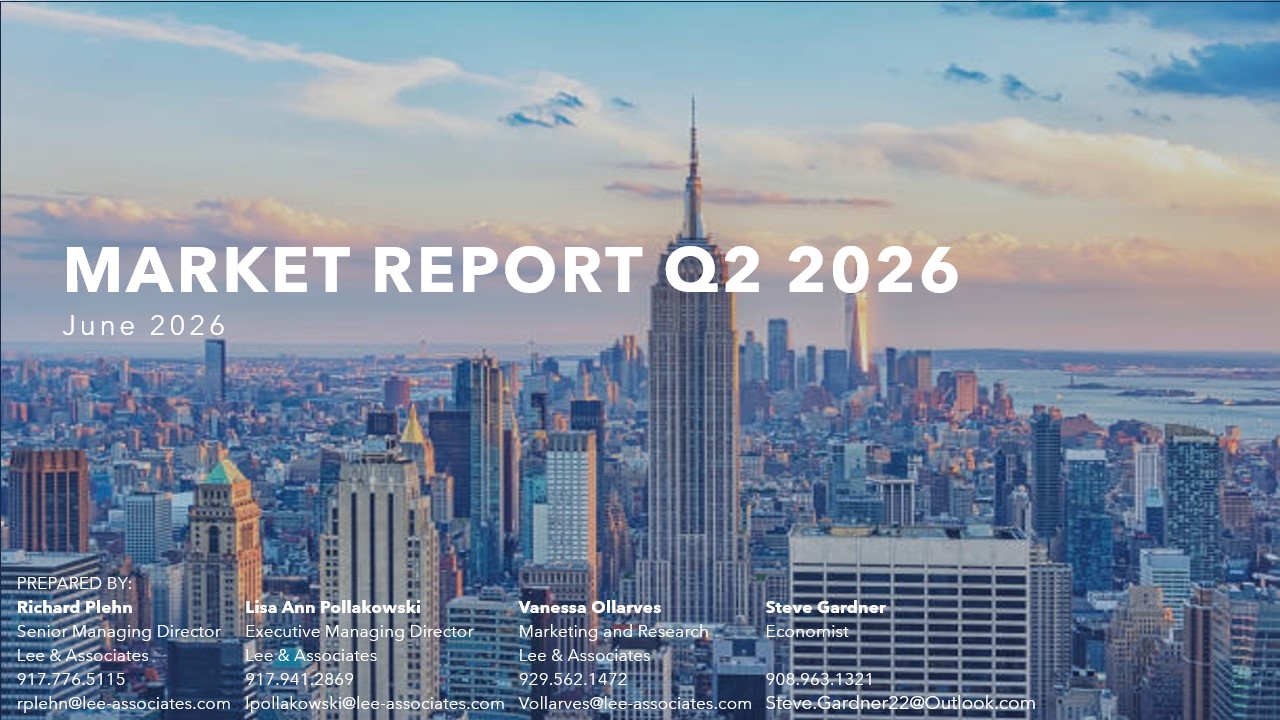

Prepared by Richard Plehn, Lisa Ann Pollakowski, Vanessa Ollarves,Steve Gardner.
Please click on the slideshow below for the full report. Alternatively, you can also follow the link on the button to read it on PDF.
The Economy
- The U.S. economy entered 2026 with modest momentum, though underlying strain has begun to emerge.
- Consumer spending, the primary driver of growth, slowed noticeably, while capital investment in artificial intelligence and data infrastructure accounted for a disproportionate share of economic expansion.
- The war with Iran, constricting oil flows through the Strait of Hormuz, continues to put upward pressure on the inflation rate.
- New York City’s economy at the close of Q1 2026 reflected a continued pattern of resilience alongside structural imbalances.
The Manhattan Office Market
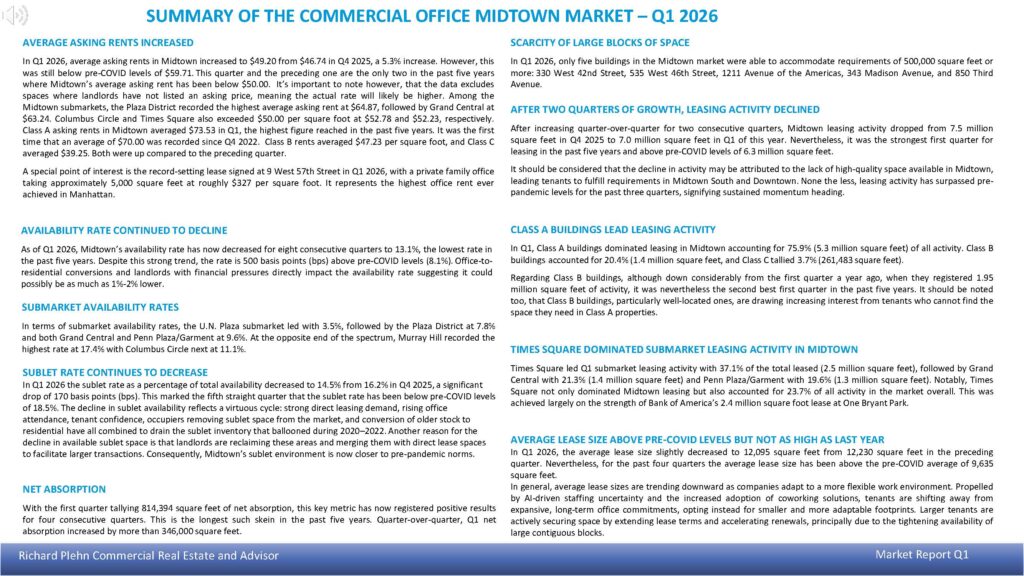
- Leasing activity for 2026 is projected to reach its highest level since the onset of the COVID-19 pandemic.
- Average asking rents increased to $50.26 per square foot still below pre-COVID levels of $59.32.
- Both starting rents and net effective rents continued to trend upward because of tenants increasing focus on higher cost space.
- The availability rate declined to 13.5%, down 30 basis points from Q4 2025, marking the eighth consecutive quarterly decrease.
- Total leasing activity reached 10.9 million square feet, the strongest first-quarter performance in the past five years.
- Class A office buildings accounted for 63% of total leasing activity.
- Nine of the ten largest leasing transactions were expansions, signaling tenant commitment to existing locations as the supply of better-quality space continues to dwindle.
- Net absorption remained positive for the sixth consecutive quarter.